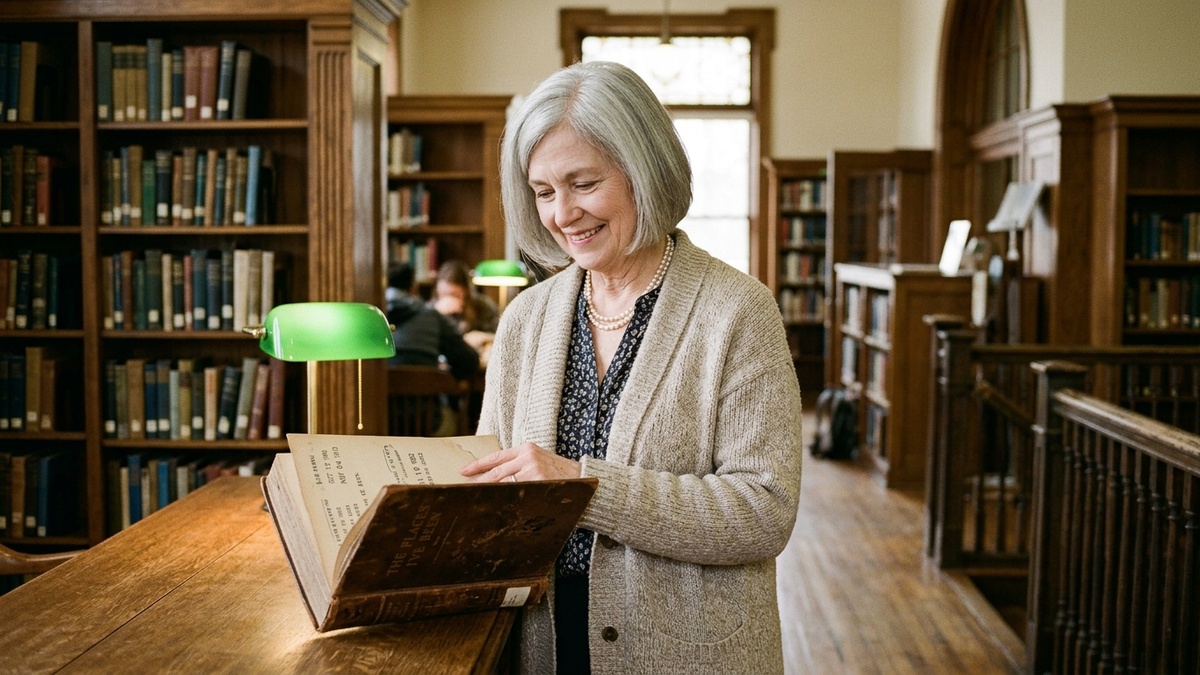
Dee reached across the table and put her hand over Wanda's.
Then she leaned toward the phone and spoke in the voice she had used in that courtroom for thirty-four years. It was not loud. It did not need to be.
"Good afternoon, Sergeant. This is Dolores Carver, deputy clerk. Mrs. Shrewsbury has asked me to assist her with the payment. I'll need a few items for the record before we proceed."
There was a pause on the line. It was short, but Dee heard it. In court, she had learned that a lie always takes a breath before it answers.
"Ma'am," the voice said, "this matter is confidential."
"It is," Dee agreed pleasantly. "Which is why it has to be done correctly. What is the case number, please?"
He read off a string of numbers. Dee wrote them down on her legal pad in her neat clerk's hand.
"Thank you. Every case number in this county starts with the year it was filed, Sergeant. What year is on yours?"
Another pause. Longer.
"Twenty-five," he said.
"Thank you." Dee wrote it down. "And which judge signed the warrant?"
"Judge Ridenour. As I told Mrs. Shrewsbury."
"Judge Harlan Ridenour?"
"Yes, ma'am."
Dee set down her pen.
"Sergeant Barnes," she said, "I kept Judge Ridenour's docket for twenty-two years. He retired in 2009. He passed away in Sarasota in 2018. I sent lilies."
The line went completely silent.
"And in thirty-four years at that courthouse," Dee went on, in the same calm voice, "this county never once called a juror on the telephone about a warrant. We sent a letter. On paper. With a seal. And the circuit court does not take fines in drugstore gift cards. Not in 1981, and not today."
Wanda had both hands over her mouth.
"Now," Dee said, "if you'd like to clear this warrant, you're welcome to come to the courthouse in person. Second floor. The clerk's office opens at eight-thirty. Bring identification. I'll tell them to expect you."
The line clicked and went dead.
Wanda did not say anything for a long time. Then she put her head down on her arms on the kitchen table and cried, and Dee rubbed her back and let her.
"I'm so stupid," Wanda said into her arms.
"You are not stupid, honey. He was good at it. That's his job." Dee squeezed her shoulder. "Your job was to be kind and do what you're told, and you did it for forty years. He knew that, and he used it."
When Wanda could sit up, Dee made her a cup of tea. Then she picked up the drugstore bag.
"Did you give him any numbers? Any at all?"
"No. He said wait until one."
"Then this is still your money," Dee said. "Let's go get it back."
They drove to the drugstore together, Dee at the wheel. The young cashier was a girl named Kaylin, nineteen, who had gone to Sunday school with Wanda's grandson. She looked at the stack of cards on the counter and then at Wanda's face, and her own face went pale.
"Mrs. Shrewsbury," she said. "Was it a phone call?"
Wanda nodded.
"I should have asked you." Kaylin's voice shook. "There's a sign by the register. They told us to ask. I just didn't want to be rude to you."
The store manager came out. The cards had not been used yet. He called the card company's fraud line with Wanda standing beside him, read off every number, and had them frozen while she watched. By Friday, the money was back in her account. Then he and Dee and Kaylin stood by the register for twenty minutes while Dee explained, kindly and in detail, how a real court notice works. Kaylin wrote it all down on the back of a receipt.
The sheriff's office took a report that afternoon. The deputy who came out, a real one, told them the same call had gone to six other women in the county that week. Two had paid.
Dee wrote a letter to the county newspaper that Thursday. She signed it Dolores Carver, Deputy Clerk of the Circuit Court, Retired. She explained, in plain words, what the court does and does not do. The paper ran it on the front page, under a picture of the old courthouse.
The following Sunday, the pastor read it from the pulpit.
The real deputy, a young woman named Haley Bostic, called Dee the next week. She asked if Dee would come talk at the senior center.
Dee went on a Wednesday with her legal pad and her good navy cardigan. Forty-one people came, more than had ever come to bingo. Dee stood at the front of the room the way she used to stand at the end of the clerk's table, and she gave them three rules.
"The court writes," she said. "The court does not call. And the court has never once in its life wanted a gift card."
She made them say it back to her twice. Wanda said it loudest of all, from the front row.
In January, Wanda got a real letter from the circuit clerk's office. She was being called for jury duty in March.
She brought it next door in both hands, the way you would carry a cake.
Dee looked at the envelope and smiled. It had a seal. It was on paper. It had come through the mail, the slow and honest way.
"That's what a real one looks like, honey," Dee said. "Paper and a stamp. You go in March. You'll make a fine juror."